
24 October 2026
Beyond the Podium: Co-Defining “Africa’s Time, Africa’s Terms” in the Age of AI
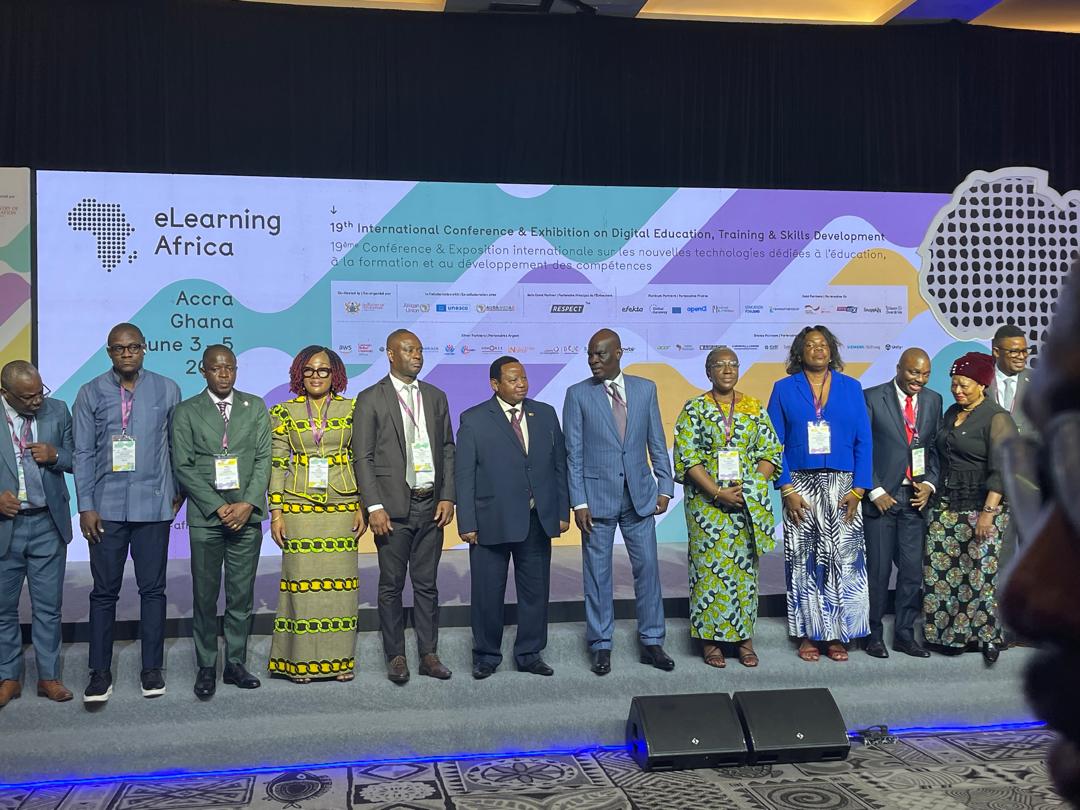
Beyond the Podium: Co-Defining “Africa’s Time, Africa’s Terms” in the Age of AI By Edwin Ketormanya
Ghanaian Teacher Educator, Data Scientist, & CEO of Keep Premium Solutions (KPS)
The curtains have drawn on the 19th Annual eLearning Africa Conference in Accra, leaving behind a resonant echo of its powerful theme: "Africa's Time, Africa's Terms: Learning for Sovereignty, Strength and Solidarity."
The conference was undeniably mind-transforming—a timely call to action. Yet, the true measure of its success will not be found in the eloquence of its speakers, but in whether our national structures and policy decisions are intentionally engineered to manifest this theme.
Having listened keenly to leaders from across the continent, and viewing these discussions through the dual lens of a data scientist and a practical educator, I believe we must confront a critical reality: Africa cannot claim its "Time" or dictate its "Terms" if we remain passive consumers of the digital revolution.
1. Shifting from AI Consumers to Algorithm Shapers
The dominant conversation today revolves around Artificial Intelligence (AI). While much of the dialogue focuses on how Africa can use AI models or write policy rules to govern them, this is a fundamentally reactive stance.
Africa must do more than govern AI usage in its classrooms; we must shape the very algorithms driving these models.
T he data architectures and algorithms behind AI must be ethical, reflective of African personalities, protective of our diverse cultures, and accurate in telling African history without distortion. But a massive hurdle remains: How do we shape these algorithms when we are largely excluded from the rooms where they are built?
As Yoshua Bengio, one of the "godfathers of AI," famously remarked in Paris: “If you are not at the table, you are on the menu.” The question for our continent is no longer whether Africa is on the menu, but how much longer we intend to stay there. We cannot build sovereignty on borrowed code and outsourced infrastructure.
2. Who Defines the Time and the Terms?
To truly realize "Africa’s Time, Africa’s Terms," we must ask a foundational question: Who actually defines the time, and who dictates the terms? Is it the policymakers, global tech giants, and international funders who write the rules from afar for us to follow blindly? Or is it the policy implementers?
True sovereignty can only be achieved if we are willing to co-define these frameworks alongside the people directly impacted by them: our teachers and learners.
Through my work leading Keep Premium Solutions (KPS)—a National Teaching Council (NTC) accredited provider—we have had the privilege of training over 20,000 teachers in ICT integration across Ghana. Working in the field, away from high-level conference rooms, we observed four undeniable truths about African educators:
Readiness: Teachers are entirely willing and deeply committed to delivering on their mandates.
Resilience: They routinely go the extra mile to implement the curriculum, even in severely resource-constrained environments.
Adaptability: The vast majority are eager to champion new educational interventions that genuinely transform learning delivery.
Capability: Teachers know exactly what needs to be done. They simply require an ecosystem that supports, rather than stifles, them.
Knowledge is currently doubling at an exponential rate. As we face a relentless wave of AI, cloud computing, the Internet of Things (IoT), robotics, and STEM education, our systems must become agile. If learning is to remain a public good, the support systems we build must be designed around the lived realities of these educators.
3. Bridging the Gap: Moving from Memorization to Innovation
During my postgraduate studies in Artificial Intelligence and Machine Learning at the University of Texas at Austin, I observed a stark contrast in pedagogical approaches. The fundamental difference lies not in what is taught, but how it is taught.
In advanced tech ecosystems, the focus is entirely on how students understand and apply concepts to solve real-world problems. Education is not engineered to pass exams or secure routine employment; it is structured to foster innovation, create scalable solutions, and generate economic value.
This is the missing link in many of our institutions. If we want our education to foster sovereignty and strength under the Continental Education Strategy for Africa (CESA 2026–2035) and the African Union’s Agenda 2063, our policies cannot just exist on paper. We must intentionally equip teachers and learners to co-define what education looks like from the continental level down to specific communities.
4. A Call to Action: Co-Authors of the Future
Teachers and learners must not merely be the subjects of educational policies; they must be the co-authors of them.
The ultimate call to action moving forward from eLearning Africa 2026 is to build environments that empower the African child to create the future they envision. We must empower African learners to be the gatekeepers and co-writers of the rules governing African Data—the very data that fuels the large language models creating trillions of dollars in value for the outside world.
It is only when we take ownership of our data, our algorithms, and our classrooms that we can truly declare, without permission, that this is Africa’s Time, on Africa’s Terms.
About the Author:
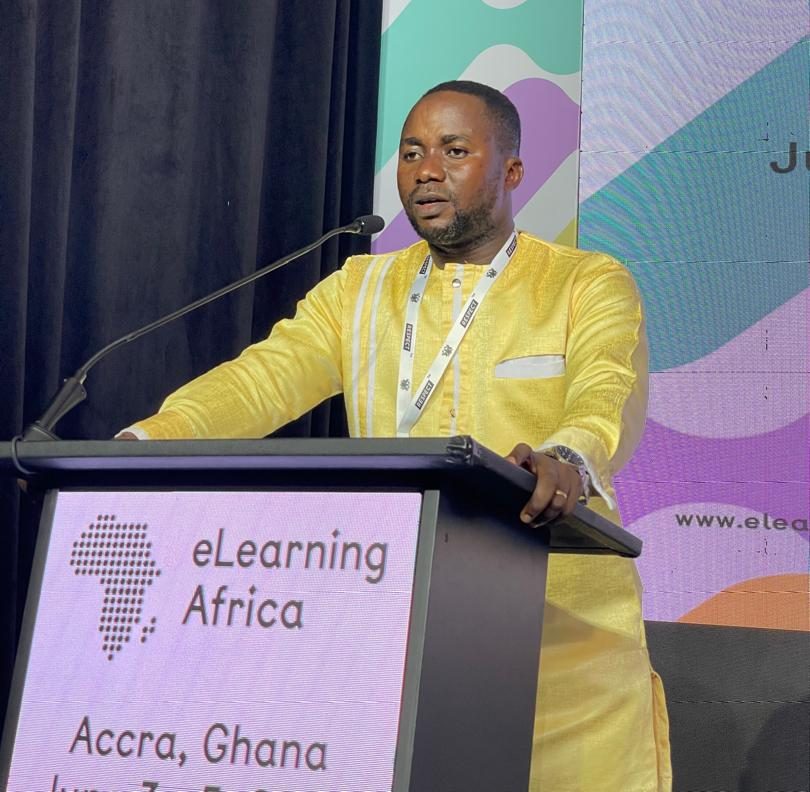
Edwin Ketormanya is a Ghanaian Teacher Educator, Data Scientist, EdTech System Consultant & Developer, and Foundational Learning Advocate. He is the Team Lead/CEO of Keep Premium Solutions (KPS), driving digital transformation and ICT integration in Ghanaian education.